
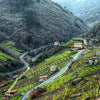

Galicia, located in northwestern Spain, is a region known for its green landscape, rugged coastline, and, above all, its high-quality wines. With a winemaking tradition dating back to ancient times, Galicia is internationally recognized for its unique wines and native grape varieties.
Origins of Galician Viticulture
Galician viticulture has roots extending back to Roman times, when they introduced vine cultivation techniques to the region. The Romans considered wine not only a drink but also an essential food. In fact, it is known that Roman soldiers carried grapevines in their backpacks as they advanced through conquered territories, such as Galicia. Wine, being safer to consume than non-potable water, and having nutritional properties, was indispensable in their daily diet.
During the Middle Ages, Galician monasteries, via the Camino de Santiago, played a crucial role in the preservation and improvement of viticulture. The monks not only cultivated vines but also improved winemaking techniques, which allowed wine to become an essential part of local culture and economy. Wine production not only sustained religious communities but was also traded along pilgrimage routes, contributing to the economic development of the region.

Over the centuries, viticulture in Galicia has evolved, adapting to climatic and economic changes, and improving its cultivation and production techniques. Today, Galicia is a benchmark in the production of quality wines, thanks to its commitment to sustainability and respect for native grape varieties.
With its five denominations of origin, Galicia is famous for its unique and high-quality wines. Highlights include:
-
Albariño de Rías Baixas: A fresh and aromatic white.
-
Ribeiro: Known for its elegant and complex Treixadura whites and fresh Sousón and Caiño reds.
-
Valdeorras: Noted for its full-bodied Godello and fruity Mencía.
-
Monterrei: Offers both Godello and Treixadura whites and Mencía and Arauxa reds.
-
Mencía de Ribeira Sacra: Fresh and mineral reds with great expression of the Galician terroir.

Sustainability and Innovation in Galician Viticulture
Currently, Galician viticulture is characterized by a commitment to sustainability and innovation. Galician winemakers are adopting ecological, environmentally friendly agricultural practices, and are recovering native grape varieties that were in danger of disappearing. Furthermore, the modernization of wineries and investment in winemaking technology have allowed Galicia to produce high-quality wines that compete in the international market.
Galician wines not only reflect the richness of the terroir and the region's winemaking tradition but also a vision for the future that embraces sustainability and authenticity. Galicia is a wine region that combines history, tradition, and modernity in every bottle of wine. Galician wines offer an experience that celebrates the diversity and richness of this corner of Spain.
-

Regalos gourmet gallegos para empresas
Descubre cómo elegir regalos gourmet gallegos para clientes, equipos y colaboradores. Packs personalizados, opciones veganas e inclusivas, cajas pr...
-

Vegan Gourmet Gifts with Galician Identity
Vegan gourmet gift ideas with Galician identity: plant-based, carefully crafted, and inclusive options for tasteful gifting. From Alga as an access...
-

Northern Bluefin Tuna and Canned Tuna
Discover the difference between Northern Bonito and Tuna in olive oil. The first, soft and delicate; the second, intense and versatile. Galician ca...


